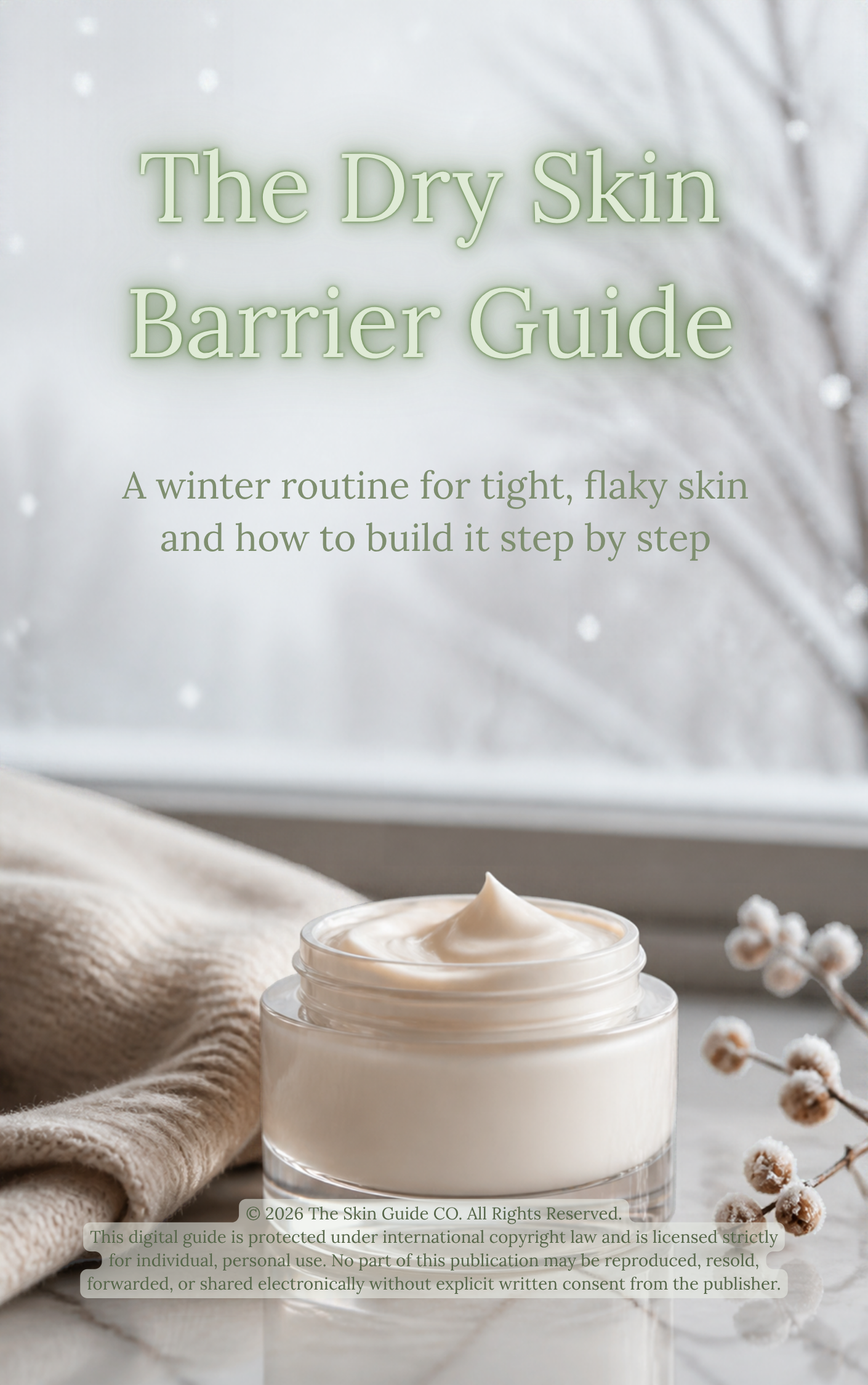
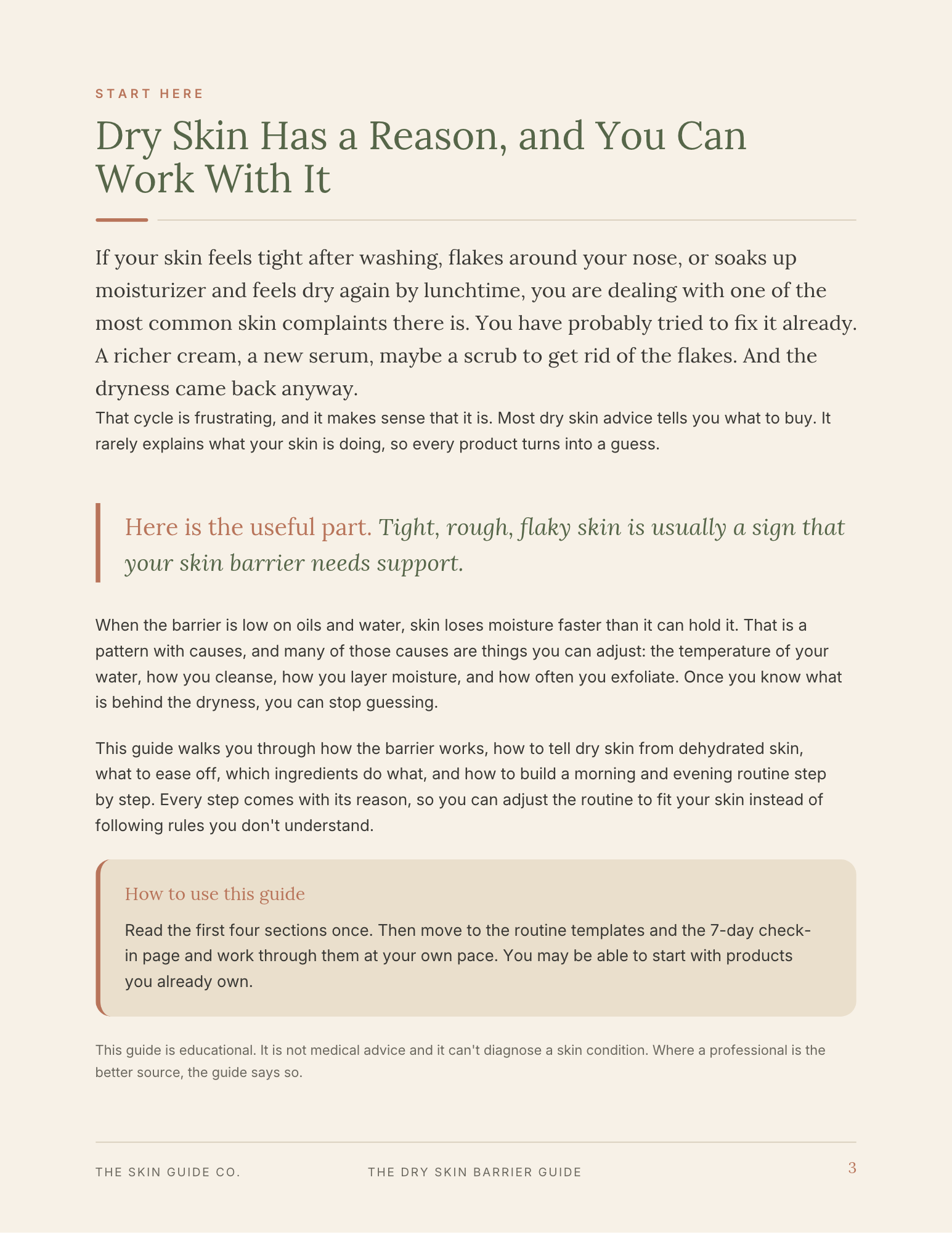
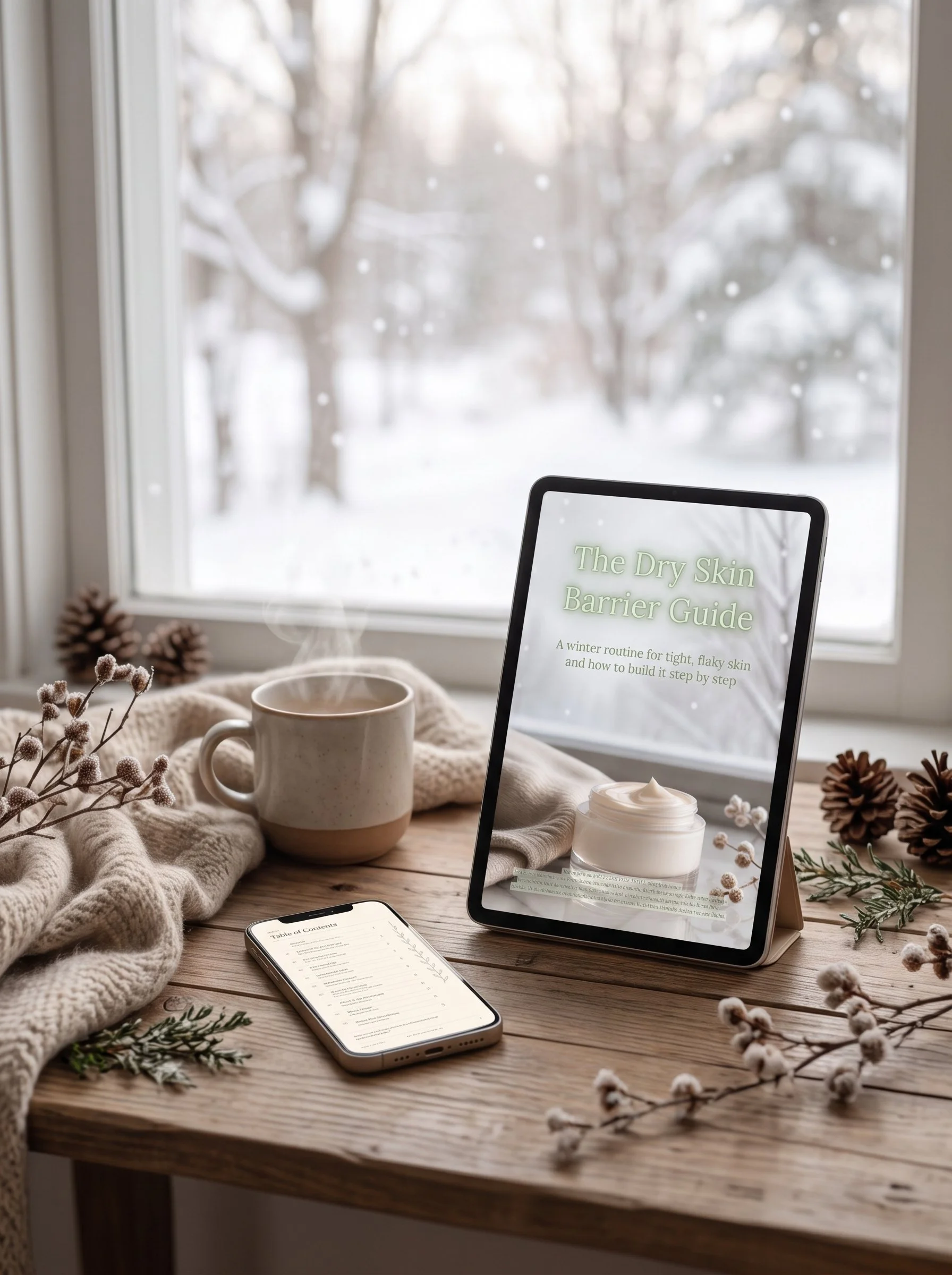

If your skin feels tight after washing and dry again by lunchtime, you have probably already tried a richer cream or a new serum. The Dry Skin Barrier Guide starts one step earlier, with what your skin is actually doing, so every choice after that has a reason behind it.
Dry skin in winter is a pattern with causes, and many of them are things you can adjust. This guide shows you which ones, in plain language and in an order you can follow.
Who this guide is for
Anyone whose skin feels tight, rough, or flaky in the colder months. Skincare beginners will find every term explained as it comes up. If you already know your ceramides from your humectants, you will find the reasoning behind each step. You may be able to start with products you already own.
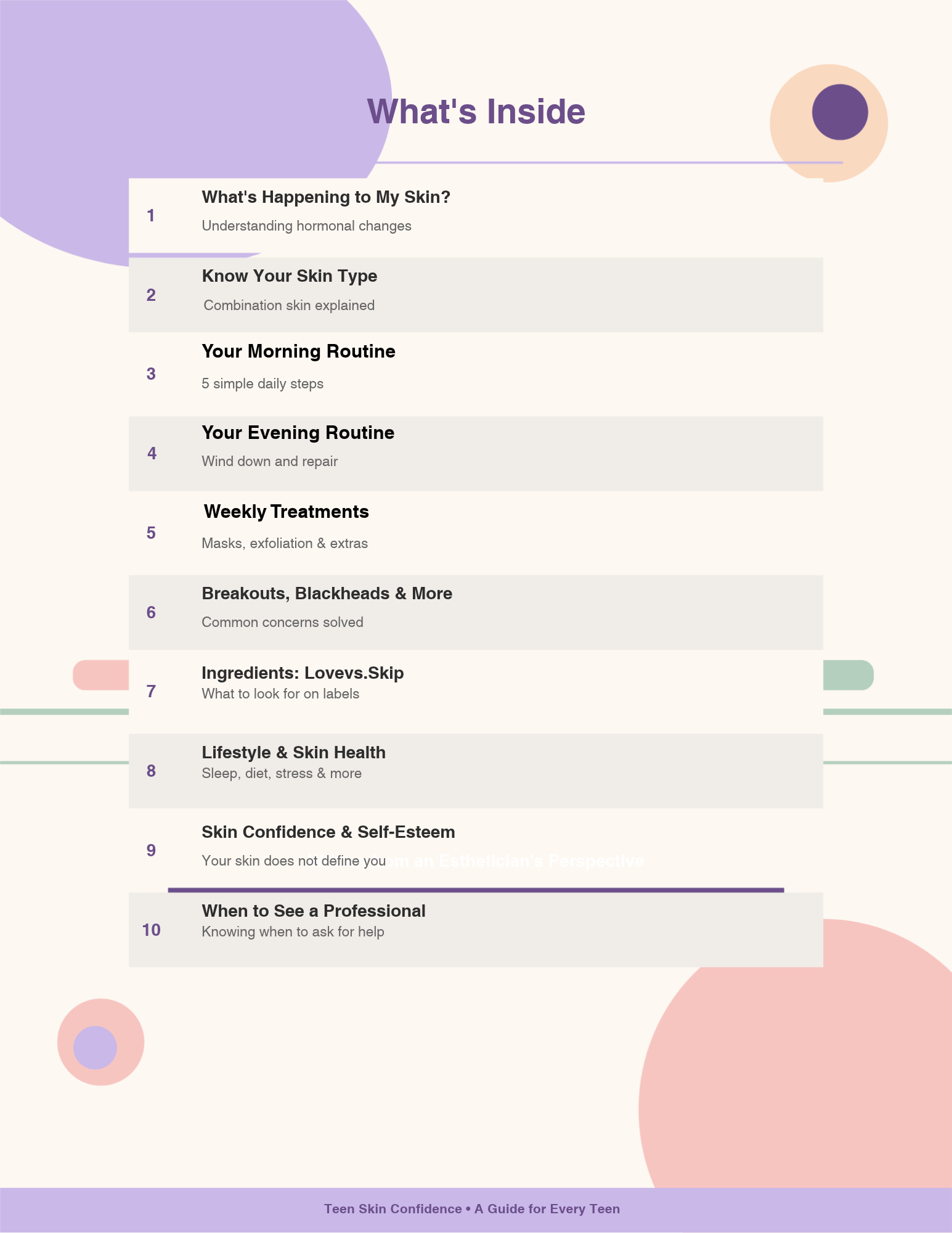
What's inside
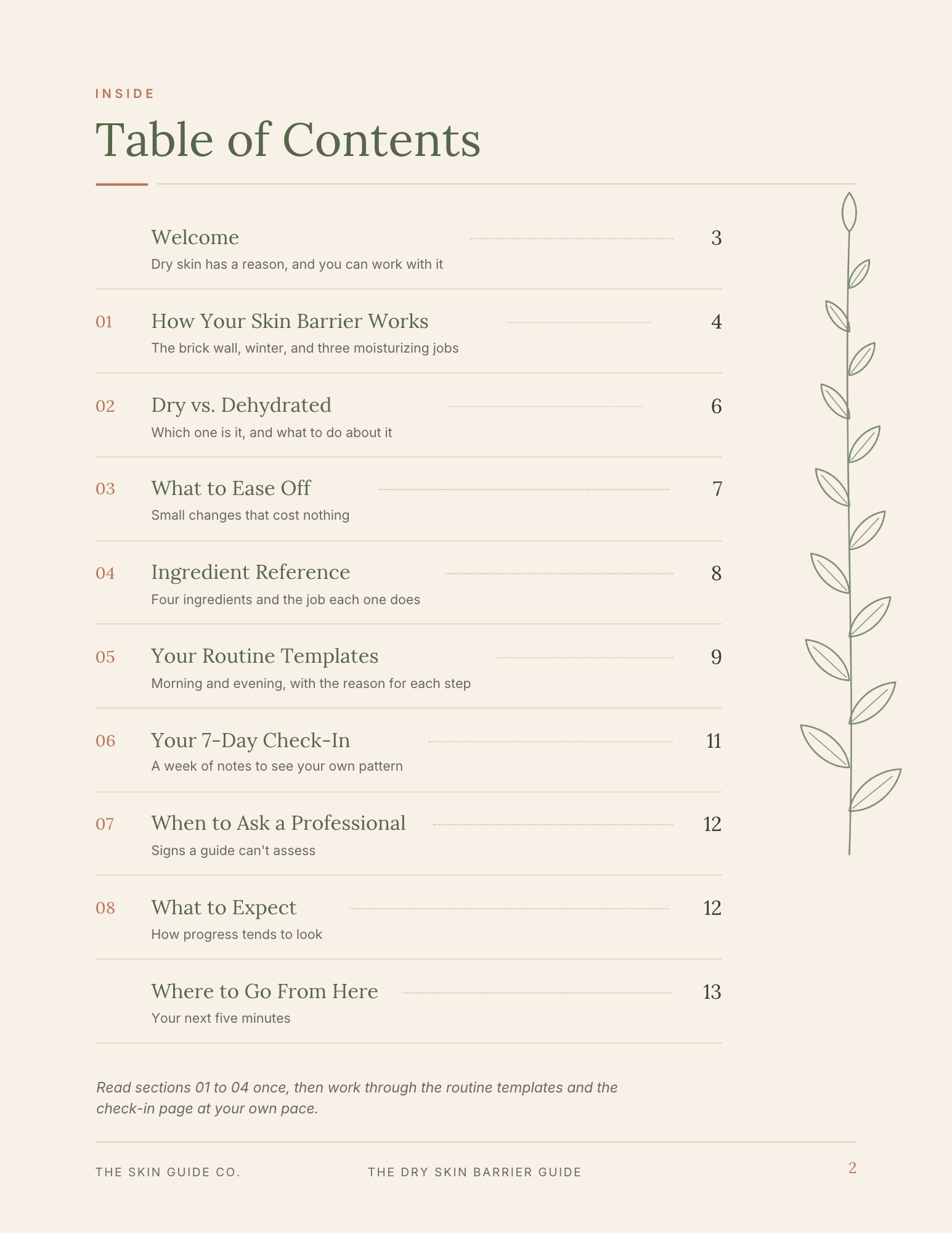
How the skin barrier works, with a simple brick wall picture
Dry versus dehydrated skin, with signs that help you tell which way yours leans
What to ease off, including hot water, over-exfoliating, and harsh cleansing
An ingredient reference for ceramides, glycerin, hyaluronic acid, and fatty acids
Morning and evening routine templates, with the reason for each step and space to write in your own products
A 7-day check-in page with a Day 7 review
Signs that call for a doctor or dermatologist, and what progress tends to look like
How it works
Read the first four sections once. Then work through the routine templates and the 7-day check-in at your own pace, changing one thing at a time so you can see what your skin responds to. Barrier support builds over several weeks, so the guide sets realistic expectations from the start.
This guide is educational. It is not medical advice and it can't diagnose or treat a skin condition.
-
Many steps are gentle by design: lukewarm water, one change at a time, and patch testing before anything new. If your skin reacts easily, the Sensitive Skin Cycling Guide covers a slower way to introduce products and pairs well with this one.
-
No. The guide explains what each type of ingredient and each layer does, so you can work with products you already own or choose your own. It doesn't name brands.
-
The guide includes a side-by-side list of signs for each, along with what to do in either case. Many people have both at once in winter. If you aren't sure of your skin type, the free post How to Find Your Skin Type at Home is a good first step.
-
The routine is built around cold-weather dryness. The guide also explains that many people can lighten it as the weather warms.
-
No. The guide is educational and can't diagnose or treat a skin condition. It lists signs, such as redness that doesn't settle or cracked or bleeding skin, that call for medical help from a doctor or dermatologist.